


-
 Lance-Canadafast shipping and no problems
 -
Lucila-BrazilEquipment of good quality, very responsible seller and fast delivery. I recommend to all Alibaba community / AliExpress. I will definitely buy more units.
-
Hamadivo-FranceBest seller,good transaction and fast delivery time
Drone UAV Spoofing System Featured with 7-15KM Coverage Radius for Drone Blocking to Creat a Safety Zone

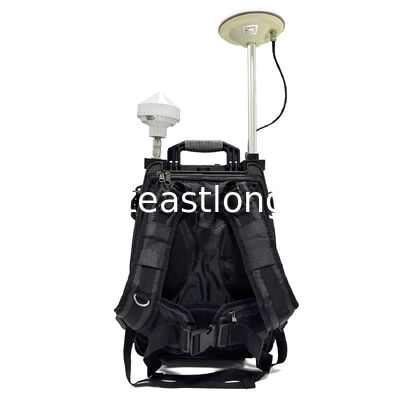
| Customersupport | 24/7 Online Support | Modes | Fake Location, Circling Motion, Linear Motion, Super Jamming |
|---|---|---|---|
| Spoofing Radius | 7-15KM | Product Name | GPS Spoofer / GNSS Spoofing System |
| Frequency Range | All GPS, GNSS, Beidou, Galileo Frequencies | Support Languages | English, Chinese |
| Battery | Built-in 3-5 Hours Rechargeable Li-ion Battery | Function | Simulates Fake GPS Locations, Or Jamming Directly |
Drone UAV Spoofing System / GNSS Spoofing / GPS Spoofer / Drone UAV Defense System with 3-15KM Spoofing Range to Creat Safety Places
UAV Spoofing System is a transformative technology in the anti-drone field in recent years. Unlike traditional jamming devices that simply and crudely cut off signals, it is more akin to a form of cyber warfare. It works by transmitting forged satellite navigation signals to "spoof" the drone's flight control system, thereby achieving covert takeover and precise dispersal of the target.
1. Development Reasons
The primary driver for developing UAV spoofing systems is the growing inadequacy of traditional jammers in addressing sophisticated drone threats.
1.1 Limitations of Traditional Jammers:
Conventional drone jammers work by emitting high-power noise to overwhelm the radio frequency (RF) or Global Navigation Satellite System (GNSS) signals, effectively severing the communication link between the drone and its pilot. However, this "brute force" method has significant drawbacks. Many modern drones are programmed to react to signal loss by either hovering in place or executing an autonomous "return-to-home" (RTH) procedure. If a drone is flying over a crowded area or carrying a malicious payload, an uncontrolled RTH or a hover could still pose a significant danger.
1.2 Rise of Autonomous Drones:
The increasing prevalence of autonomous drones that rely primarily on pre-programmed flight paths and GNSS for navigation, rather than continuous pilot control, renders simple RF jamming less effective. These drones can continue their mission even without a pilot link.
1.3 Collateral Damage and Regulatory Issues:
High-power jammers are indiscriminate. They can disrupt critical communications in the area, affecting cell phones, Wi-Fi networks, and emergency services, which is why their use is heavily regulated or prohibited in many civilian jurisdictions. This created a need for a more surgical and safer counter-measure.
2. Technical Advantages (Compared to Jammers)
Drone spoofing offers a paradigm shift from disruption to control. Instead of just cutting the signal, it outsmarts the drone.
2.1 Drone Spoofing System
a. Method of Action:
Deception & Override: transmits counter GNSS signals (e.g., GPS, BeiDou) to trick the drone's navigation system.
b. Effect on Drone:
Controlled Response: can force the drone to land at a designated location, follow a fake "no-fly zone" command, or be steered away.
c. Collateral Impact:
Low (Surgical): targets specific drones by mimicking authentic signals, causing minimal interference to surrounding communication systems.
d. Effectiveness Against Autonomy:
High: highly effective against drones flying autonomously via GPS, as it directly manipulates their navigation source.
e. Technical Complexity:
High: requires precise signal generation, timing synchronization with real satellites, and understanding of navigation protocols.
2.2 Traditional Drone Jammer
a. Method of Action:
Disruption: broadcasts high-power noise to drown out command-and-control or GNSS frequencies.
b. Effect on Drone:
Unpredictable Reaction: May cause the drone to crash, hover, enter "return-to-home" mode, or fly erratically.
c. Collateral Impact:
High (Brute Force): creates a "dead zone," disrupting all radio communications (cell phones, WiFi) in the area.
d. Effectiveness Against Autonomy:
Low: less effective against autonomous drones that don't rely on a continuous pilot command link.
e. Technical Complexity:
Moderate: primarily requires high-power amplifiers tuned to the right frequencies.
**Key Technological Edge: DRFM (Digital Radio Frequency Memory)**
Advanced spoofing systems, like Leonardo's BriteStorm, utilize **Digital Radio Frequency Memory (DRFM)** technology. DRFM allows the system to capture and analyze the exact pulse of an enemy radar, then manipulate and project it back. This creates "phantom" targets or completely masks the true location of friendly assets, making it far more sophisticated than noise jamming.
3. Product Prospects
The market for drone spoofing systems is experiencing explosive growth, driven by the proliferation of drones and increasing security threats.
3.1 Market Growth: The global drone spoofing system market was valued at approximately **$1.2 billion in 2024** and is projected to reach **$5.8 billion by 2033**, growing at a compound annual growth rate (CAGR) of **19.2%**. Similarly, the broader "soft kill" system market (which includes spoofing) is also expected to grow at a CAGR of around 19%.
3.2 Shift in Demand: There is a significant shift from all security applications to homeland security and critical infrastructure protection. Governments are mandating counter-drone systems at airports, power plants, and public events, which favors the adoption of low-collateral spoofing technologies over jammers.
3.3 Technological Convergence: Future prospects lie in integrating spoofing with Artificial Intelligence (AI) for automatic threat assessment, and combining it with other detection systems (radar, RF scanners) for fully autonomous counter-drone networks.
4. Product Applications
Spoofing systems are deployed across various platforms and scenarios to ensure airspace security.
4.1 Army & Defense:
- **Base Protection:** Protecting installations from hostile surveillance or attack drones.
- **Electronic Warfare (EW):** Systems like **BriteStorm** can be mounted on "loyal wingman" drones to act as stand-in jammers, creating phantom formations to protect manned jets or disrupt enemy Integrated Air Defense Systems (IADS).
- **Convoy Security:** Protecting ground convoys from drone-borne improvised explosive devices (IEDs).
4.2 Homeland Security & Critical Infrastructure:
- **Airport Security:** Preventing drones from disrupting commercial air traffic, a major concern for aviation authorities worldwide.
- **Power Plants & Energy Facilities:** Guarding against espionage or potential attacks on national grids and oil refineries.
- **Government Buildings:** Creating a secure perimeter around sensitive government zones.
4.3 Commercial & Public Events:
- **Event Security:** Ensuring safety at large public gatherings like sports stadiums, concerts, and political rallies where drones could be used for malicious purposes.
- **Prisons:** Countering drones attempting to smuggle illegal (phones, drugs, weapons) into correctional facilities.
4.4 Mobile and Handheld Operations:
- **Drone Guns:** Portable, gun-shaped "spoofers" allow security personnel to locally override a drone's GPS signal and guide it away from a protected area.
- **Vehicle-Mounted Systems:** Deployable systems for rapid response teams to intercept drones during VIP movements or temporary security events.